

Do you need to build a garage, a workshop or a concession?
9 November 2026New partition on Actiflip!
9 November 2026Storing chemicals products increases the risk of fire, explosion, poisoning, burning, etc. Actiflip guides you to choose the right equipment and presents you with tips and obligations to organize your storage places while reducing risks.
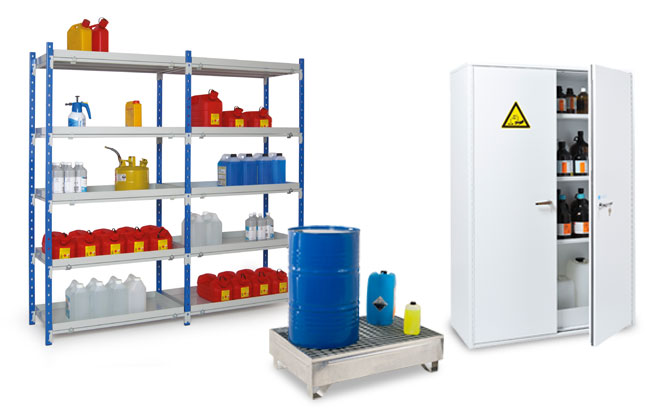
The choice of material:
Actiflip has a wide range of solutions for the safe and compliant storage of toxic, harmful, corrosive, flammable and phytosanitary products:
- Lightweight retention shelving: ideal for small containers of pollutants and non-corrosive products.
- Secure racking: designed to limit access to products or bulky materials.
- Safety cabinets: multi-risk or insulated wall, these cabinets with a large retention tanks will be ideal for all your flammable, toxic, harmful, irritating and corrosive products.
- The cabinets for phytosanitary products: these cabinets allow a safety storage of your phytosanitary products and in conformity with the legislation.
- Polyethylene cabinets: ideal for storing your corrosive products, indoors and outdoors.
- Containers and pallets: for your chemicals, corrosives, hydrocarbons, solvents, etc.
- Containers and dumpsters: to complete your equipment and keep clean premises.
Basic and indispensable advice:
- Always separate incompatible products (concentrated acids and bases)
- You can download here the complete table of “chemical incompatibilities”.
- Store the solids above the liquids. For liquids, plan for equipment with a retention tank to prevent leaks.
- Less stock = risk reduction. If you are not concerned by a large volume, store small quantities and don’t keep unused products, which end up becoming unnecessary generators of risk.
Advice and obligations concerning your local and arround:
- Your room must be under control and have a limited access only to those trained for hazardous products.
- Keep under control the key in case of absence.
- The door of your room must open to outside and must be equipped with a panic system.
- Post warning signs (no smoking, eating, drinking, wearing PPE, flammable materials, etc.) according to your inventory.
- The room must be sufficiently spacious and easy to access to allow easy and safe movement.
- Your floor must be resistant to chemicals, non-flammable, waterproof and must be tilted slightly towards a recovery pit.
- Equip it with natural ventilation.
- Plan for absorbent products and an ABC powder fire extinguisher.
- Keep a stock status up to date.
- Respect the expiry dates.
How to avoid the risk of falls, leaks, etc. ?
- Never clutter your equipment or stack with your products.
- Regularly check for corrosion on your equipment.
- Poor storage can lead to embrittlement of packaging and products. Always keep in mind that evaporation of a flammable product is not necessarily easy to see and that inhalation of a toxic product can lead to chemical burns and intoxication.
How to avoid the risk of fire?
- To prevent the spread of a fire, store your large quantities of products separately from the rest of your building.
- The access to the premises must be easy for a quick evacuation of the premises. A storage in the basement is not recommanded.
- Minimize electrical installations.
